Is it too late for me?
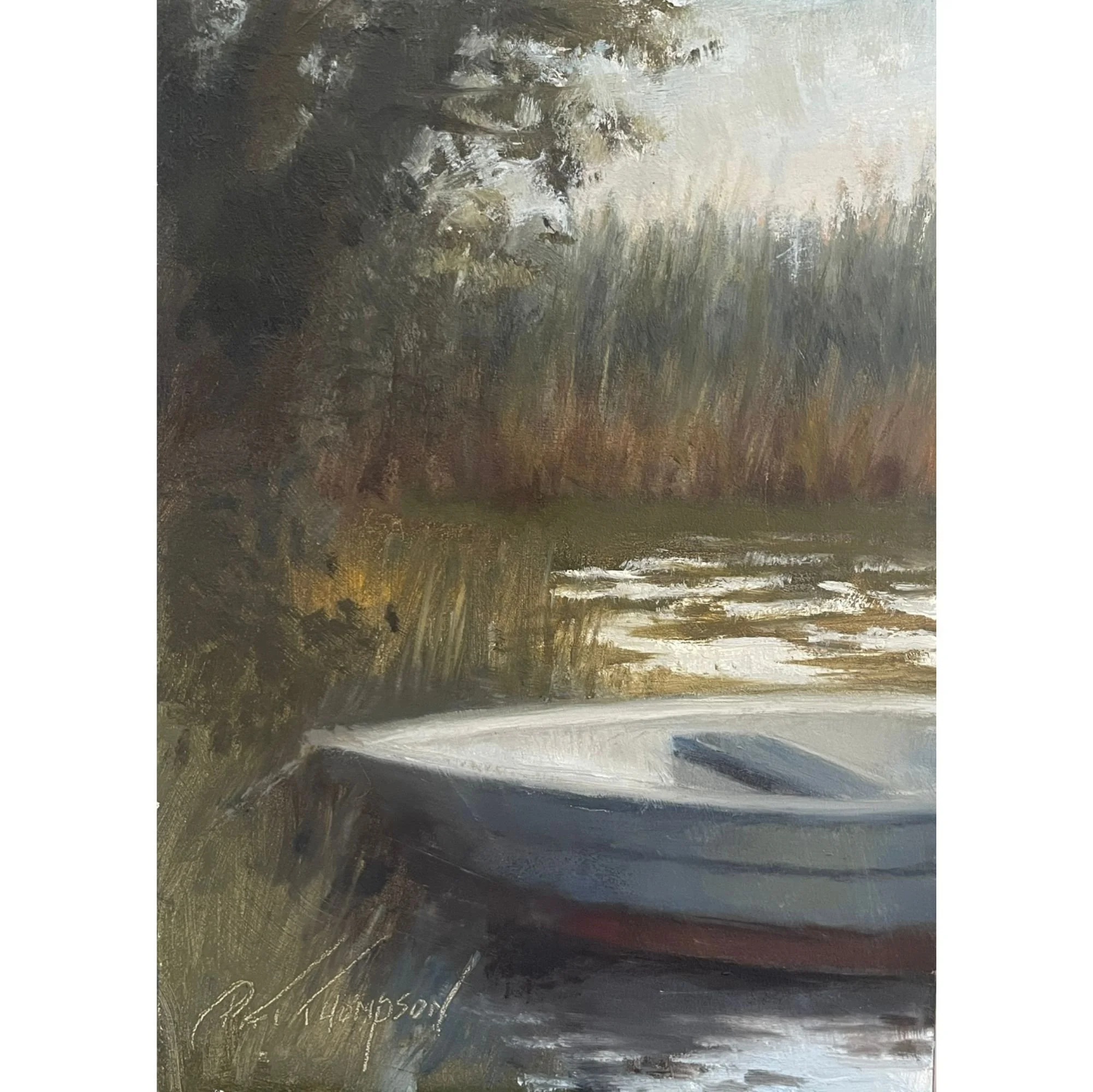
Banked . Oil on Panel . 7 × 5” . Pat Thompson
“Is it too late for me?” This is a common question from new students about to begin art lessons with me. After all, if it’s too late, maybe they should rethink moving forward? Many people who loved to do art when they were younger got derailed somewhere along the way, but when an opportunity arrives for them to get back to it, are often filled with doubt.
They can be hesitant to even contact me, but when they do, so many apologies come with them. “Yes, I used to do a little art a long time ago, but I would like to get back to it,” often adding sheepishly, “but I’m not very good; I can’t draw a straight line; I am just looking for a hobby.”
The first thing I tell them is that I can’t draw a straight line either; it's actually not a prerequisite. Then I tell them that they should let it unfold as it comes, not to make up their mind about where they are going, or where they will end up. So much of their success will be because of their own drive to do it. The time that they put into studio time, either with me, another class, or in their own home studio, will determine the speed of how fast they will grow.
“Is it too late for me?” I hear this so often, and the answer is always a resounding no; it’s never too late to begin or start again. There is an interesting phenomenon about the visual arts. It is well documented that if a child wants to learn a different or multiple languages or master a musical instrument, the mind of a child is best prepared to learn these things.
I remember when I wanted to enroll my oldest son in piano lessons, a mature musician said that if he was to truly accomplish anything, he would need to start no later than age nine, earlier if possible. Since he would turn nine in a few months, I almost became obsessed with enrolling him before his birthday.
For some reason, art is different. I believe that it is due to the fact that your skills of observation are constantly maturing. I have seen too many adults, sometimes well past retirement age, who have never so much as held a piece of charcoal or made a single stroke, who end up learning and producing wonderful paintings over time.
My husband and I, also an artist, developed a workshop called Introduction to Oil Painting. We held it two or three times a year over a full weekend, specifically designed for the delayed or derailed artist. What they accomplish over a single weekend never surprises me but often shocks them! They can’t believe that this thing they have thought about for so many years is something they can actually do. I believe that we have a 95 percent success rate; the five percent were usually signed up by a well-meaning friend or loved one, or someone who just signed up for the lark of it!
I can’t tell you how fulfilling it is to get people started, getting them back into it, and then often continue to study with us in class, sometimes for many years. We had a student come to our workshop with one of the deepest desires we have ever seen, but with no experience or background. He was a professor at a highly esteemed university and understood he would have to put in his time; he did just that! At one point, entering a contest with a very well-known national art publication. Not only did he win an award, but he went on to be featured in an article down the road in the same publication.
I recently spoke with him, and as he talked, he nodded towards the doorway entrance to our studio. “It all started here, beginning with the first Introduction to Oils Workshop. I still remember how the room looked, how it felt, and the smell of oil paint; it all started right here!
“Is it too late for me?” Not by a long shot!
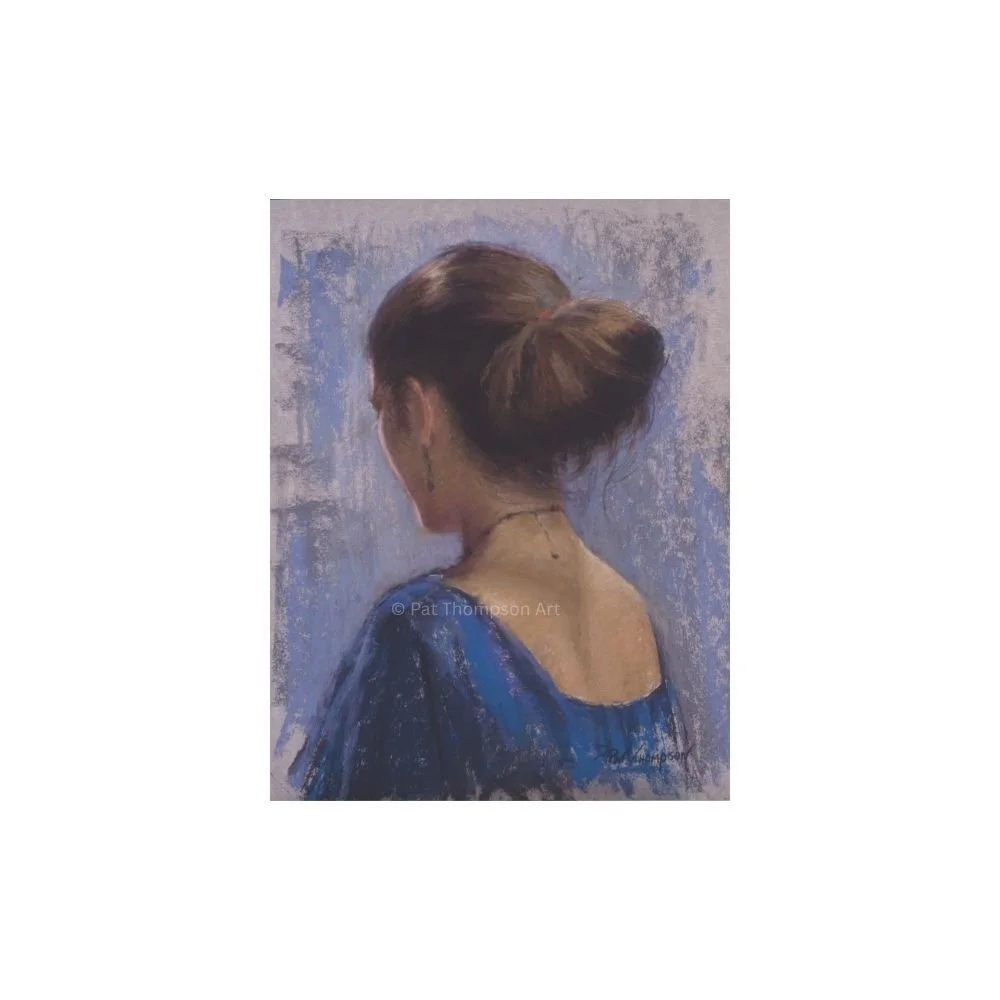
Expectation
Pat Thompson . Pastel . 9 x 12”