
The Wishing Tree . 6 × 8”. Oil . Pat Thompson
When I began my first year of college, I was thrilled that I would be learning new things. I would also be taking art classes, finally starting my journey. Needing to take other subjects, part of the requirements of working towards a degree, a physical sport of some kind had to be included. I had never excelled in sports; I was trying to find something fun. Looking through the catalog, I found something: diving!
I had watched diving on television and sometimes poolside; I thought it to be so beautiful, similar to a graceful dance. Wanting to learn this, I signed up, realizing on the first day I had made a big mistake. I raised my hand and asked the instructor if I needed to know how to swim. He was astonished. Of course you need to swim to get out of the water after the dive. I have since learned, but I was so eager to do this that I wanted to skip the basics! Needless to say, I sat on the edge of the pool terrified the entire semester. On the last day, the teacher tossed me in and fished me out. He did think it was kind of funny.
I have thought about this since I do tend to get ahead of myself. When I was much younger, I wanted to play the piano and begged my parents to get me lessons. They signed me up, but when I arrived, the teacher began my instruction by learning the scales. Over the next few months, I worked up to a slow rendition of “Twinkle, Twinkle, Little Star.” I was hoping that when I sat down to the keys on the first day, a song would just spill out; I knew the music was in me, but no song showed up. Just practicing basics was not what I was hoping for. I quit after six months, just too restless at that age to focus, I guess.
I’ve had so many students who just wanted the painting to flow out of a magic brush, but there is no such thing. My biggest challenge when working with a new student seems to be helping them to be at peace with where they are. For some reason, people seem to understand that if you want to play the piano, you will need to learn the basics, study, practice, and put in the time, but if a person is an artist, it’s just automatic! I promise you it’s not; it is the same.
Painting is like everything else in life; to accomplish mastering a craft, you need to learn the basics. The foundation that you build needs to be addressed; practicing these skills is a constant in the art journey. Many people believe that art is different somehow, that it just shows up suddenly as if talent is automatic, but it’s not; the desire, interest, and love for the craft are your talent.
When I was in my late twenties, after moving a lot, never being in a place long enough to get a degree, I found I needed one. I was hired as an in-house illustrator for Aladdin Industries, painting lunchbox art. They were corporate and had a system and process in place to decide your salary, and in order to get in a better salary range needed a degree of some kind.
If I totaled all the accredited classes and art instruction I had received over the years, I should have had five years’ worth, but transferring these credits with all my moves left me short. I had to go back to school.
I enrolled in an art class, and the teacher gave me an assignment. I had to draw a single egg in pencil with one light source. I must admit I was a bit surprised since I had studied at some well-respected art schools under well-respected artists. I had been working in oils and pastels; I had done a great deal of figure drawing, and she wanted me to draw an egg? I questioned her assignment, but she said I would not receive a grade without it.
Oh my gosh! I learned so much from that egg. Values (light to dark), edges (sharper when there was more value contrast), terminator (the value of the shadow as it starts and lightens when the form turns, and reflected light coming from behind. I was blown away! I finally got why she had insisted on this seemingly simple exercise. My work grew exponentially; she could see in my portfolio that some basics had been skipped, and going forward my progress actually sped up.
So be kind to yourself; If you start with the basics and get a good foundation, you will get there, but if you feel you can skip that and go immediately to painting, it can actually discourage you and slow you down. If you did move forward without the basics, please go back and strengthen them. There is no shortcut, but by accepting that and enjoying the journey, you will arrive and end up getting there faster, I promise.
My husband had a student in his class for three years, painting multiple still life setups, learning how to draw, how to render objects and judge proportion, how to mix color, assess values, and color temperature. She was addressing the foundational skills needed to paint, then went on to study with some accomplished landscape painters and eventually moved into a very impressionistic style. She now travels all over, teaching others and winning awards. Her work is amazing and strong because it is built on a strong foundation.
The art journey requires patience and practice. If you invest your time upfront in foundational skills, you will arrive and be able to dive into the water and swim to the edge on your own.
Expectation
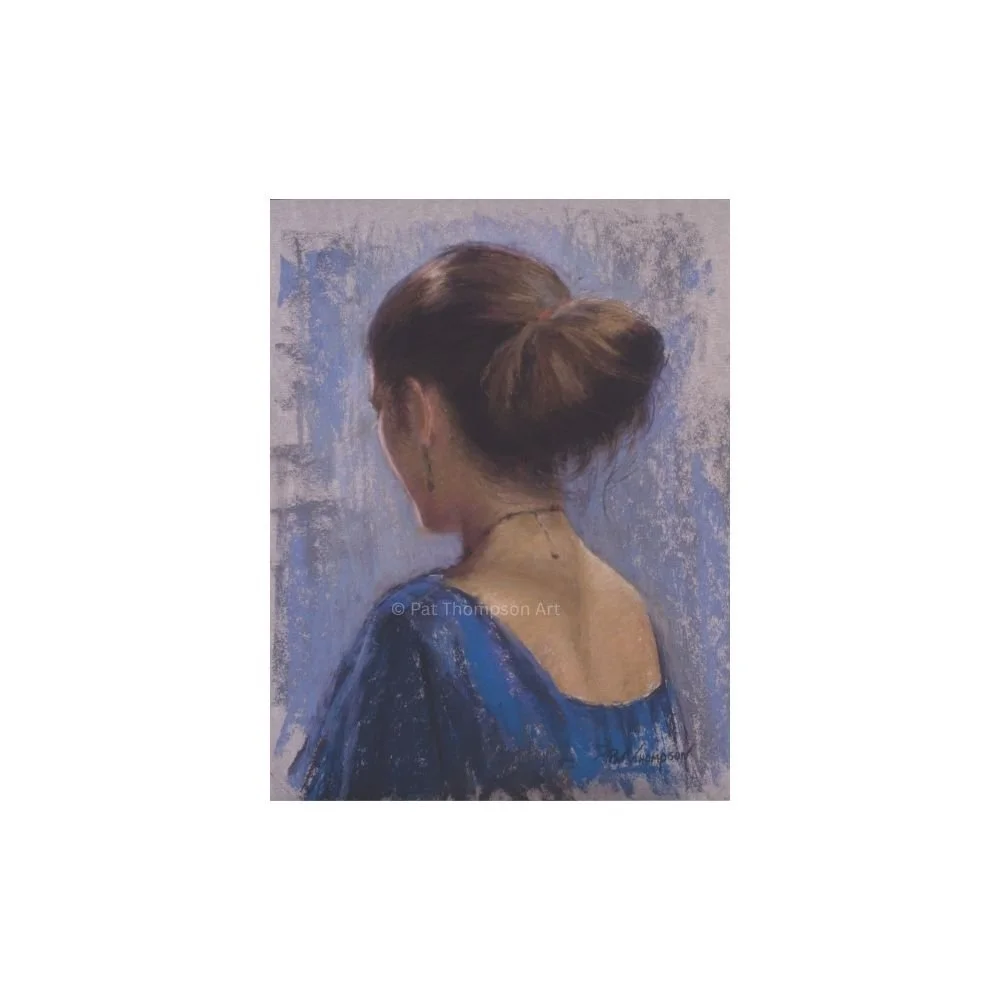
Pastel . 9 × 12” . Pat Thompson